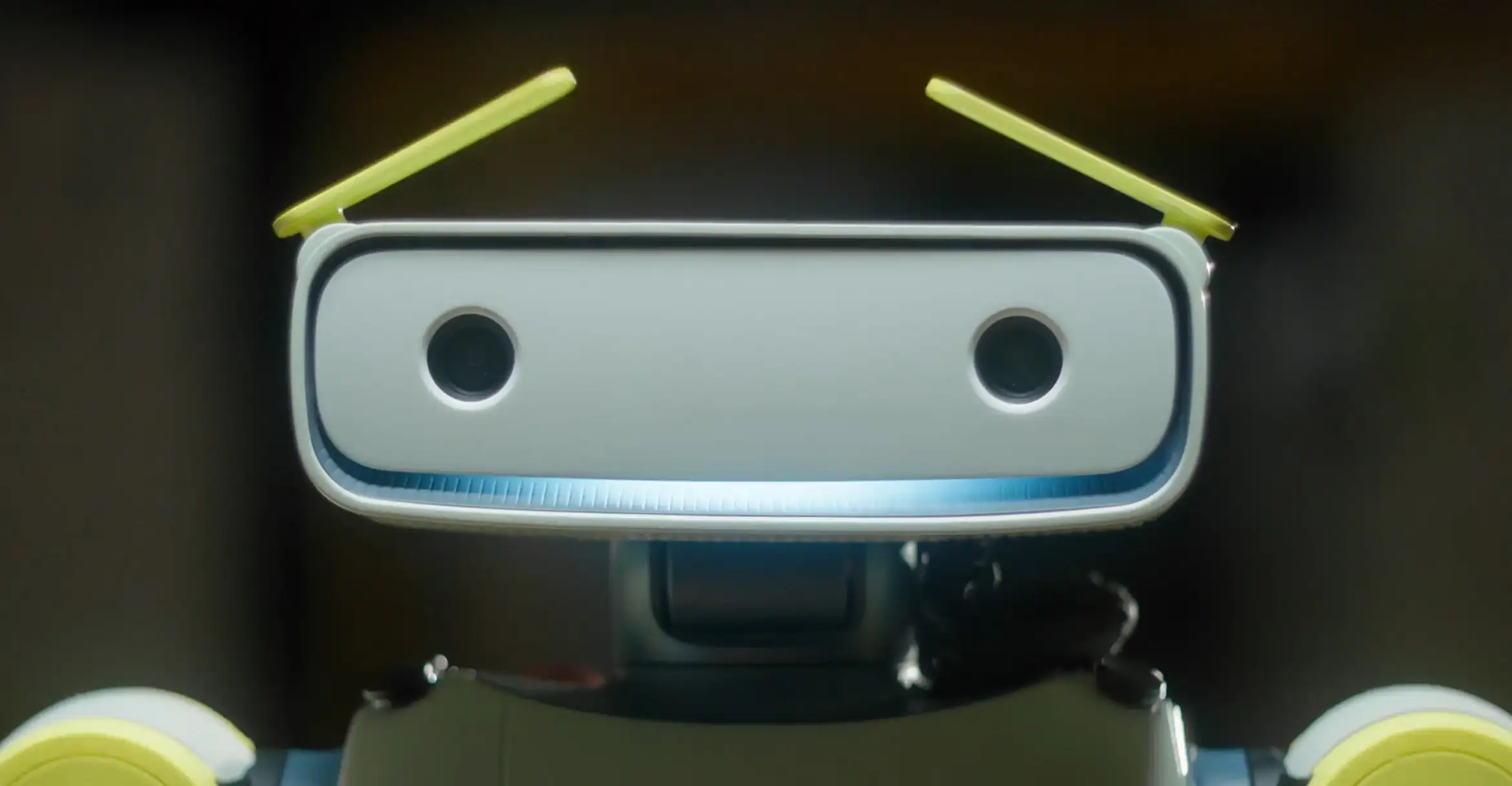
Fauna Robotics Unveils Sprout: A Lightweight, Interactive, and Capable Developer-Ready Humanoid Platform
Fauna combines NY tech talent, safety-first design, and modular AI to build the foundation for humanoids in human spaces
.jpg)
NEW YORK, January 27, 2026 — Fauna Robotics today launches out of stealth with its debut robot Sprout. Shipping today as a Creator Edition, Sprout is a friendly and capable humanoid robot platform designed to operate safely in shared human spaces. Moving beyond the closed industrial systems of the past, Sprout offers developers, researchers, and creators a platform to build the next generation of embodied intelligence applications.
Sprout is already in use at several leading organizations exploring applications across retail, entertainment, home services, and other people-friendly spaces. Early customers utilizing the platform include Disney, Boston Dynamics, UC San Diego, and NYU.
"We started Fauna with a simple premise: robots belong around people," said Rob Cochran, Co-founder and CEO of Fauna Robotics, formerly of CTRL-labs. "To date, robotics efforts have delivered heavy machinery poorly suited to working alongside people, in the places we spend the most time. Sprout is different. It is a canvas for developers—designed from first principles with safety in mind, so creators can focus on what excites them rather than building hardware and core software from scratch."
Solving the Deployment Gap
Despite advances in hardware, AI, and robotics research, it remains rare to see a humanoid outside a lab or a video demo. The field has long struggled with obstacles preventing real-world deployment, including a lack of practical developer platforms and industrial designs that are too dangerous for shared spaces.
Fauna’s Sprout addresses these challenges by providing a safe, friendly platform for anyone—from advanced robotics researchers to first-time developers—to build applications that work in production and in real human environments.
Safety at the Core
Most existing humanoid platforms are unsafe around people; they tend to be heavy, rigid, and overpowered, forcing developers to take industrial-level precautions.
Sprout changes this paradigm. Instead of being hoisted on a gantry, Sprout can sit on a chair; instead of being caged off, Sprout can stand next to you at your desk. The robot is designed with safety features from the ground up to reduce risk in shared spaces:
- Lightweight, Soft-Bodied Design: Standing 1.07 meters (3.5 feet) tall and weighing just 22.7 kg (50 lbs), Sprout features a soft exterior with minimized pinch points, making it easy and comfortable to handle.
- Low Kinetic Energy: A compact height and low center of gravity maximize safety while maintaining a wide range of motion.
- Compliant Control: Compliant motor control policies allow Sprout to yield to external forces rather than fighting them, utilizing software-level limits on motor torques.
- Active Sensing: Integrated time-of-flight safety sensors provide constant obstacle avoidance and awareness.
“Having a platform that’s smaller and safer to use gives our graduate and even undergraduate students the confidence to learn with less physical risk and experiment more boldly.” said Ludovic Righetti, Professor of Electrical and Computer Engineering and Mechanical and Aerospace Engineering at NYU. “We are excited to see Sprout solve locomanipulation and reasoning problems both in a lab setting and in real-world environments, among people.”
A Unified Developer Platform
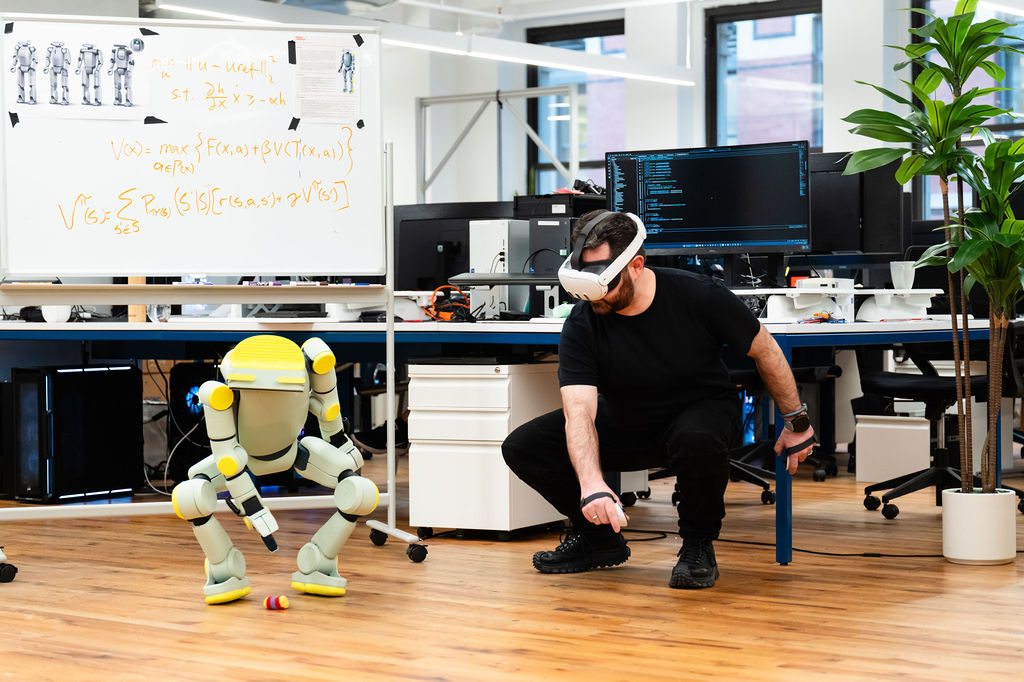
Developers have historically lacked options for deploying robotics applications, often having to stitch together numerous third-party libraries. Sprout makes advanced robotics accessible by delivering a comprehensive platform equipped with an SDK that allows developers to begin building real applications within minutes rather than months.
“We built the robot we believe the robotics community has actually wanted, shaped by years of working closely with researchers and developers as the field of AI-driven robotics has matured,” said CTO and Co-founder Josh Merel, former DeepMind research scientist. “Our goal is to make humanoid robotics genuinely accessible, pairing thoughtfully designed hardware with a proper SDK and set of well tuned robot services. We’re excited to see a much broader community of creators, not just experts, build frontier-level robotics applications.”
To support this community, Sprout is equipped with:
- Modular AI Architecture: A flexible stack allowing teams to use their own models anywhere in the system.
- Ready-to-Use Motion Capabilities: Trained motor control policies for walking, kneeling, crawling, and sitting are available out-of-the-box. It can jump, dance, and wave hello.
- Integrated Autonomy: A built-in mapping and localization pipeline alongside full-body teleoperation capabilities with integrated grippers.
- U.S.-Based Support: Production, data handling, and support are based in the United States to accelerate development and maintain tight control over security.
Designed to be Friendly
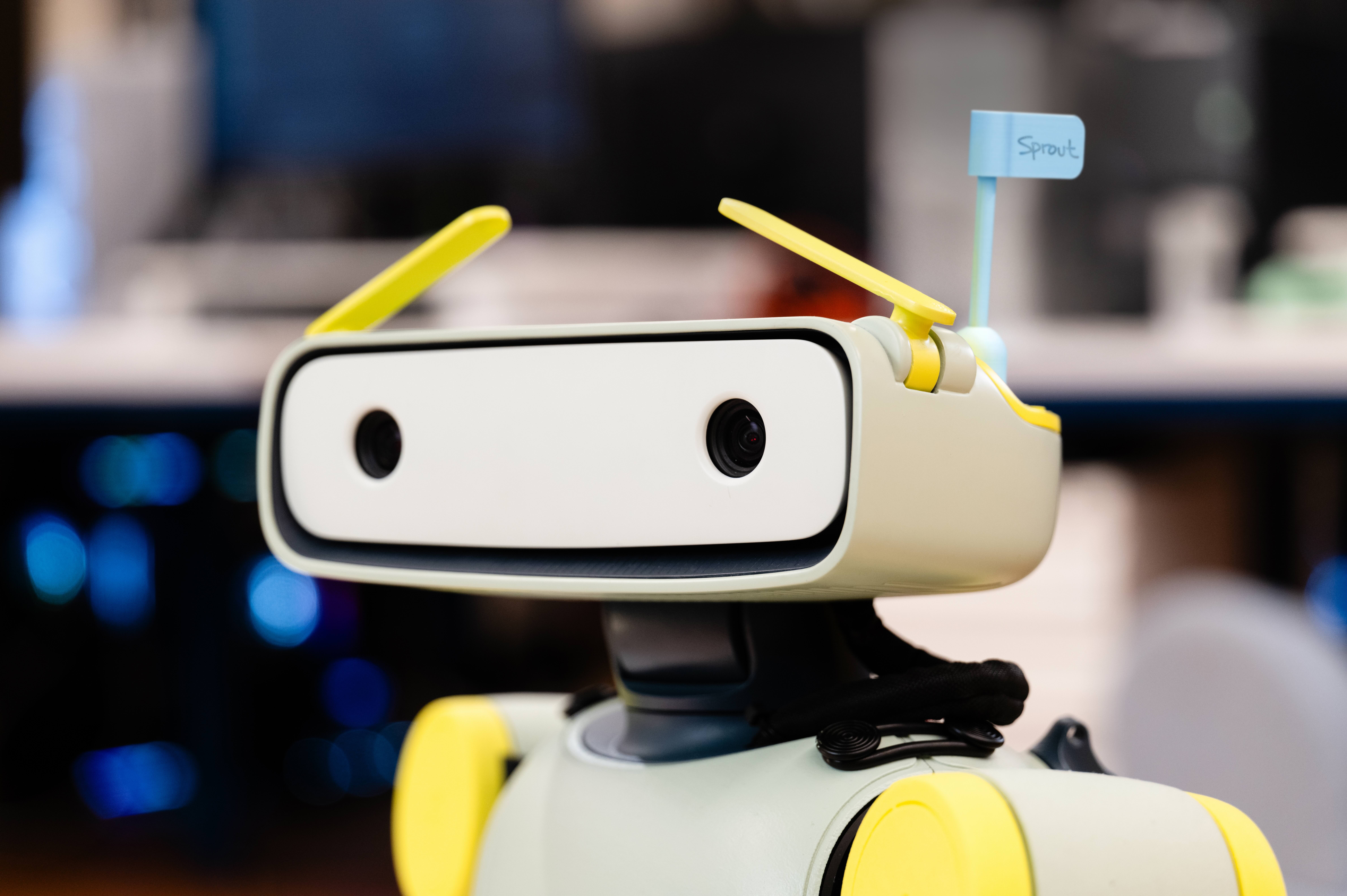
To support a vision of robots operating everywhere people do, Sprout is approachable and human-friendly. While most robot platforms favor industrial forms, Fauna prioritized approachability in every aspect of the design.
Sprout has all the tools it needs to converse naturally, allowing developers to direct the robot via voice to perform tasks or navigation. It expresses emotion through articulated eyebrows, LED facial displays, and body language, packaged in an ergonomic form factor compatible with human environments.
“We looked beyond engineering specs to the characters that have captured our collective imagination for decades. Robots like Baymax, BB-8, and Wall-E taught us that approachability doesn’t come from looking human, but from feeling alive,” says VP of Hardware, Anthony Moschella, former Peloton VP. “If we want a future where robots live alongside us, we can’t just build machines that are tolerated—we have to build robots that are loved.”
Availability
Sprout is available starting today for researchers, educators, and commercial developers. The platform is manufactured in the United States, with engineering and production teams based in New York City.
Technical Specifications at a Glance:
- Height/Weight: 107 cm / 22.7 kg
- Degrees of Freedom: 29 (including active eyebrows)
- Compute: NVIDIA Jetson AGX Orin (64GB)
- Sensing: ZED 2i Stereo Camera, 4x ToF sensors, 4x Microphone Array, IMU
- Battery Runtime: 3–3.5 hours (swappable)
For more information, videos, or to request a Sprout, visit faunarobotics.com.
About Fauna Robotics

Fauna Robotics is on a mission to build capable, safe and fun robots for everyone. Unlike the expensive, heavy, and intimidating industrial robots we know today, Fauna is deploying approachable, lightweight robots in human-centric spaces that are safe to be around anyone from adults to children to pets. Fauna makes its robots in America and works with some of the largest companies in the world to scale commercial applications in entertainment, retail, and home services. Combining deep product and research talent, the NYC-based team has been involved in multiple exits and several market‑defining hardware lines. Learn more at faunarobotics.com.
Media Contact
Carly Bourne
press@faunarobotics.com